
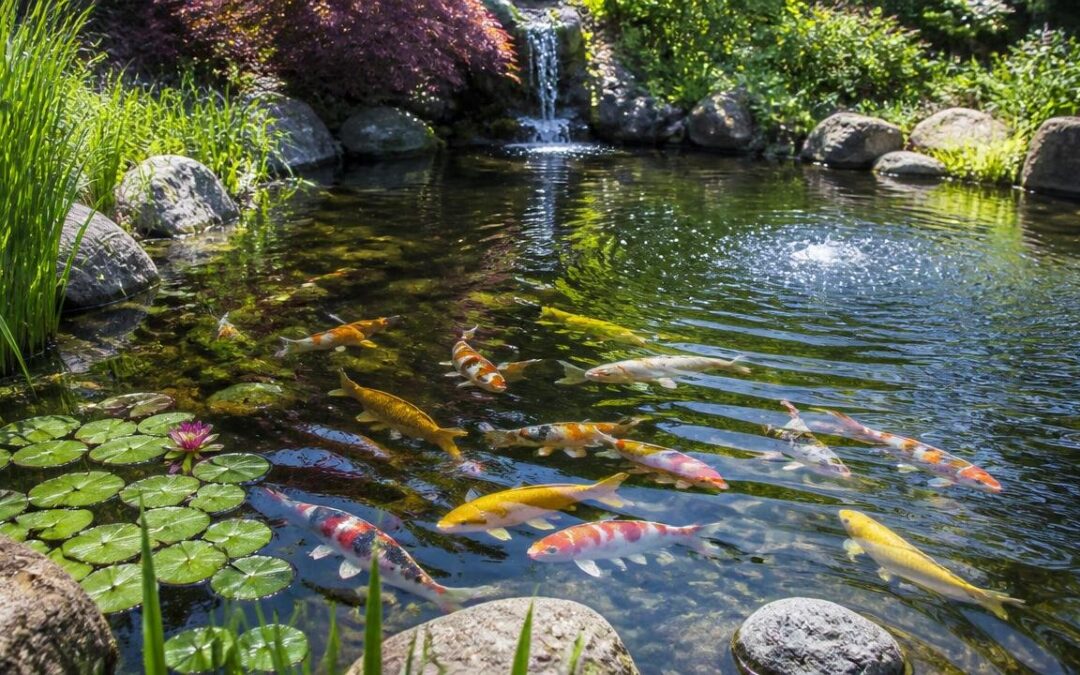
Hot, calm weather can create challenging oxygen conditions in a koi pond. Warm water naturally holds less dissolved oxygen than cool water, while koi, aquatic plants, algae, and beneficial microorganisms continue to use oxygen around the clock. When wind is still and the pond surface is not being mixed, oxygen levels can become especially stressful before sunrise.
Good preparation, steady circulation, and careful observation can help reduce the risk of oxygen stress during heat waves and stagnant weather.
Why Oxygen Demand Rises Overnight
During daylight, aquatic plants and algae may produce oxygen through photosynthesis. After sunset, that process stops, but koi, plants, algae, and microorganisms continue to respire and consume oxygen. Decomposition of organic material also uses oxygen.
Oxygen levels may therefore decline through the night and reach their lowest point in the early morning, just before daylight strengthens photosynthesis. Hot water compounds the problem because it holds less dissolved oxygen than cooler water. A calm, cloudy, or overcast period can add further pressure by reducing daytime oxygen production.
Warning Signs of Oxygen Stress
Watch koi closely during hot weather, particularly at dawn. Possible warning signs include:
- Gasping or lingering at the surface, especially near returns, waterfalls, or other areas of movement
- Unusual crowding near the pond edge or a water inlet
- Rapid gill movement or visibly increased breathing effort
- Lethargy, loss of balance, or reduced interest in food
- Koi gathering directly beneath a source of aeration or flow
- Multiple fish behaving abnormally at the same time
These signs can have other causes, including water-quality problems, illness, or temperature stress. Treat sudden, pond-wide changes as urgent and check the water as soon as possible.
Improve Aeration and Surface Movement
Aeration works by increasing contact between water and air. Air stones, diffusers, fountains, waterfalls, and well-positioned returns can all contribute to gas exchange, depending on the pond design and the equipment in use.
Place aeration for circulation
Air outlets are generally most useful when they help move water through the pond rather than leaving large areas stagnant. Consider the pond’s depth, shape, shelves, bottom drains, and existing circulation pattern. Avoid assuming that one location will oxygenate every part of a complex pond.
Deep aeration can move oxygenated surface water downward while bringing lower water upward. However, changing circulation suddenly may disturb settled debris or alter temperature layers. Make adjustments gradually and observe the koi and water clarity.
Keep the surface active, not violently turbulent
Visible surface movement is helpful because it encourages gas exchange. Aim for consistent rippling, circulation, or a controlled waterfall rather than unnecessary splashing. Excessive turbulence can increase evaporation and may stress fish if it creates strong currents or traps them against an outlet.
Make sure floating plants do not cover too much of the surface. Dense surface coverage can limit gas exchange, particularly at night, even though plants may contribute oxygen during the day.
Support Oxygen Levels Through Pond Maintenance
- Remove decaying leaves, sludge, and other organic debris where practical.
- Avoid overfeeding during very hot weather. Uneaten food decomposes and increases oxygen demand.
- Maintain filters and pumps according to their instructions so flow is not restricted by clogging.
- Check that intake screens, pipes, air lines, and outlets are clear.
- Use shade or other sensible methods to help limit excessive heating, while preserving adequate surface circulation.
- Test water quality when fish behavior changes. Ammonia, nitrite, pH, and temperature can all be relevant to the diagnosis.
Do not make large water changes or add treatments solely as an emergency oxygen response without considering temperature, water chemistry, and the needs of the fish. Sudden changes can create additional stress.
Plan for Power Failures and Equipment Problems
Hot, still weather is a good time to review the pond’s backup plan. Keep spare air line, connectors, check valves, and other compatible maintenance items available. Know which pump, air pump, or circulation system is most important to maintain surface movement, and check that backup equipment is ready before it is needed.
A backup power source may help maintain essential aeration during an outage, but it should be selected and used according to the manufacturer’s instructions. Protect electrical connections from water, use suitable outdoor electrical safety equipment, and never handle plugs or cords with wet hands.
If the primary system fails, restore safe aeration as quickly as possible. Avoid placing electrical equipment where it can fall into the pond, and do not improvise unsafe wiring. If fish are already showing severe distress, contact an experienced pond professional or aquatic veterinarian while addressing the immediate aeration problem.
What to Do if Koi Are Gasping
- Start or restore a safe source of aeration and surface movement.
- Check whether pumps, air lines, outlets, and intakes are operating normally.
- Reduce feeding until the fish return to normal behavior and water quality has been assessed.
- Observe all koi, not just the fish nearest the aerator.
- Test dissolved oxygen if suitable testing equipment is available, along with temperature and key water-quality parameters.
- Seek professional advice if distress is severe, persists, or affects many fish.
Do not crowd, chase, or net stressed koi unless there is a specific safety reason. Keep the pond shaded where possible, maintain calm and stable conditions, and avoid adding unverified remedies.
A Simple Hot-Weather Checklist
- Check aeration and circulation each morning and evening.
- Look for gasping, unusual clustering, or rapid breathing.
- Clear blocked intakes, air lines, and filter components.
- Keep organic debris and uneaten food under control.
- Limit feeding during extreme heat or abnormal fish behavior.
- Confirm that backup aeration and power arrangements are ready.
- Inspect the pond again before dawn, when oxygen may be at its lowest.
Consistent surface movement, sensible stocking and feeding practices, clean equipment, and a reliable backup plan are the foundations of oxygen management. By checking the pond before problems become severe, koi keepers can respond earlier and help fish cope with hot, still weather.