
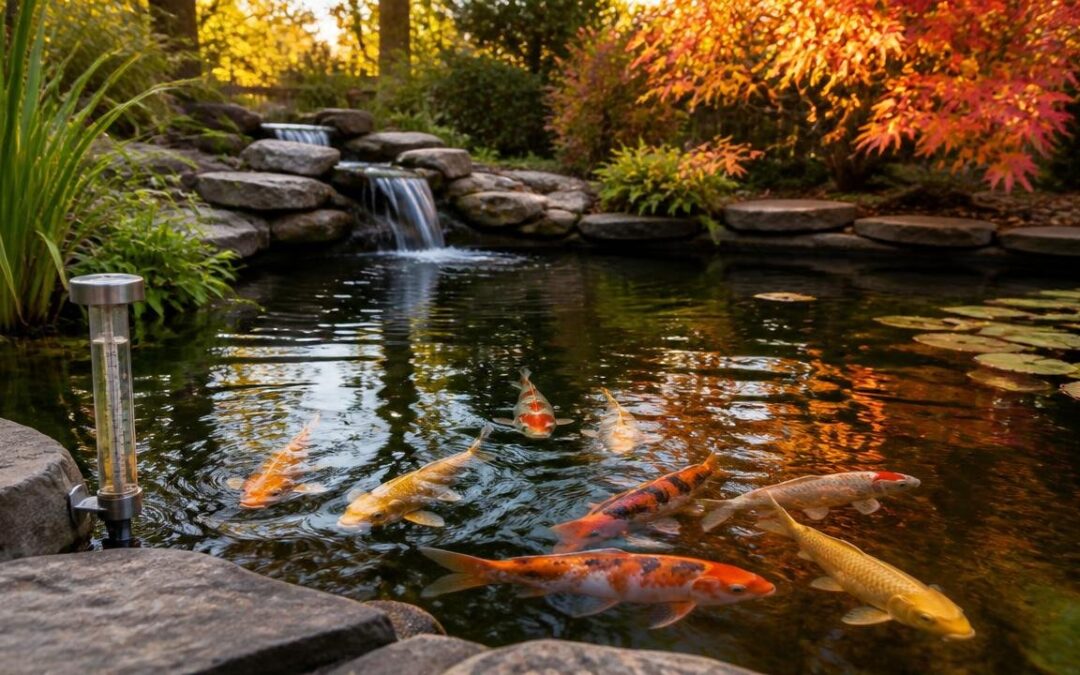
As late summer heat begins to fade, koi feeding habits should change gradually with the pond’s conditions. Water temperature, daylight, weather patterns, and fish behavior can all influence digestion and appetite. Rather than following a fixed calendar, use these signs to adjust feeding thoughtfully.
Monitor Water Temperature and Fish Behavior
Use a reliable pond thermometer to check the water regularly, ideally around the same time of day so readings are easier to compare. Late summer ponds can still warm significantly during the afternoon while cooling quickly overnight, so a single reading may not tell the whole story.
Temperature is a useful guide, but it should be considered alongside koi behavior. Active koi that gather calmly at feeding time and consume food readily may still be maintaining a strong appetite. Koi that become noticeably less active, remain near the bottom, or show less interest in food may be responding to cooler or rapidly changing conditions.
- Record temperature trends rather than relying on one measurement.
- Observe whether koi approach food normally and feed with steady interest.
- Pay attention to sudden changes in activity, appetite, or swimming behavior.
- Consider weather changes, cold nights, heavy rain, and reduced daylight when evaluating feeding response.
Reduce Portions Gradually
When water temperatures begin to decline or the koi take longer to finish a meal, reduce the portion size rather than continuing with the same late-summer routine. Smaller portions make it easier to match the amount of food to the fish’s current appetite and reduce the chance of leftovers.
There is no single portion reduction that suits every pond. Stocking level, koi size, water temperature, filtration, and the type of food all affect how much can be offered responsibly. Begin with a modest adjustment, observe the response, and make further changes only if the fish continue to show reduced interest or food remains uneaten.
Feeding less frequently may also be appropriate as conditions cool, but the change should be based on the pond rather than the date on the calendar. During warm, stable periods, koi may continue to feed normally. During cooler or unsettled periods, smaller meals or a temporary pause may be more suitable.
Recognize Uneaten Food
Uneaten food is one of the clearest signs that a feeding routine needs adjustment. Ideally, koi should consume the offered food promptly and without a prolonged loss of interest. If pellets remain floating, sink to the bottom, drift into corners, or become trapped around plants and equipment, remove them when practical and offer less at the next feeding.
Watch for indirect signs as well. Food may be difficult to see in a heavily planted pond or after it sinks into debris. Inspect common collection points, such as shallow edges, skimmer areas, and the bottom of the pond. A persistent food odor, cloudy water, or increased surface debris can also indicate that excess organic material is accumulating, although these conditions can have other causes.
- Offer only an amount the koi are likely to finish during the feeding period.
- Stop feeding when the fish lose interest rather than encouraging them to continue.
- Remove visible leftovers where possible.
- Reduce the next portion if uneaten food is found after feeding.
Protect Water Quality as Feeding Changes
Feeding patterns and water quality are closely connected. Excess food breaks down into organic waste and can increase the workload for the pond’s biological filtration. As temperatures shift, the balance between fish activity, waste production, and filtration performance may also change.
Continue checking the pond as feeding is adjusted. Observe water clarity, surface activity, odors, and the condition of the filtration system. Follow a consistent maintenance routine appropriate for the pond, and test water parameters when there are signs of stress or a noticeable change in water quality.
Avoid making several major changes at once unless there is an urgent water-quality concern. Gradual feeding adjustments, regular observation, and timely removal of waste make it easier to identify what is affecting the pond.
Use a Flexible Late-Summer Routine
A practical routine is to check the water temperature, observe the koi before feeding, offer a conservative portion, and watch how quickly the fish respond. Reassess the pond after weather changes and as nighttime temperatures continue to fall.
Healthy seasonal management is less about following a universal feeding schedule and more about matching food quantity and frequency to the koi’s behavior and the pond’s changing conditions. By reducing portions when appetite declines, recognizing leftovers early, and maintaining water quality, koi keepers can help their fish transition from late summer toward fall with fewer avoidable problems.