
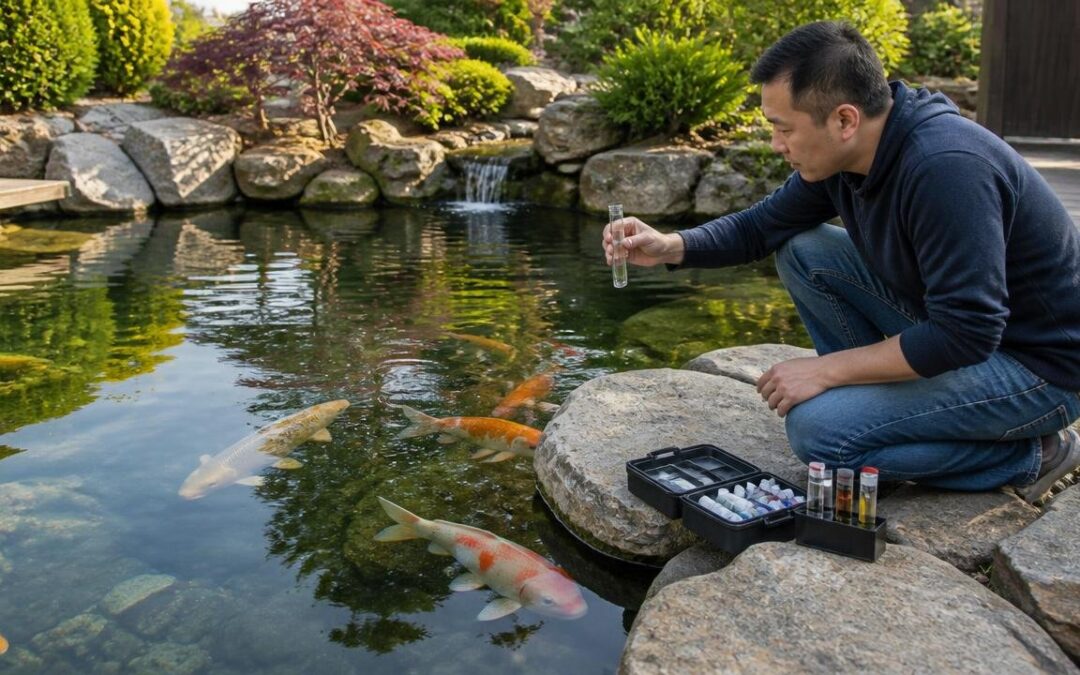
Before changing filtration, increasing feeding, adding aeration, or using a water treatment, take time to check your pond water. Testing provides a clearer picture of what is happening and helps prevent well-intentioned adjustments from creating additional stress for your koi.
Key Parameters to Check
- Ammonia: Ammonia can rise when waste production exceeds the pond’s biological filtration capacity.
- Nitrite: Nitrite levels can indicate that the biological filtration process is not fully keeping pace with waste breakdown.
- Nitrate: Nitrate provides useful information about ongoing nutrient accumulation and maintenance needs.
- pH: Stable pH is important because sudden shifts can be stressful for koi and affect water chemistry.
- KH: KH helps indicate the pond’s buffering capacity and how resistant the pH may be to sudden changes.
- Temperature: Temperature affects koi activity, feeding, oxygen needs, and the performance of beneficial bacteria.
Test Before You Adjust
A pond that appears clear is not necessarily chemically balanced. For example, increasing feeding when ammonia or nitrite is already elevated may add to the problem. Likewise, changing filtration or applying a treatment without understanding the current water conditions can make it harder to identify the cause of a problem.
Test results should be considered alongside careful observation. Watch for changes in koi behavior, appetite, breathing, swimming patterns, and how they respond to the pond environment. If a reading is unexpected, confirm the result with a properly conducted test before making a major adjustment.
Make Changes Gradually
Sudden changes to water chemistry, temperature, oxygen levels, or pond operation can create additional stress for koi. Once you understand the test results, make appropriate adjustments carefully and monitor the pond afterward. Rechecking the water helps show whether the change is having the intended effect.
Koi Enterprise can be a useful resource for pond equipment, water testing supplies, and technical support. However, the most important first step is always the same: observe, test, and understand the pond’s condition before making major changes.